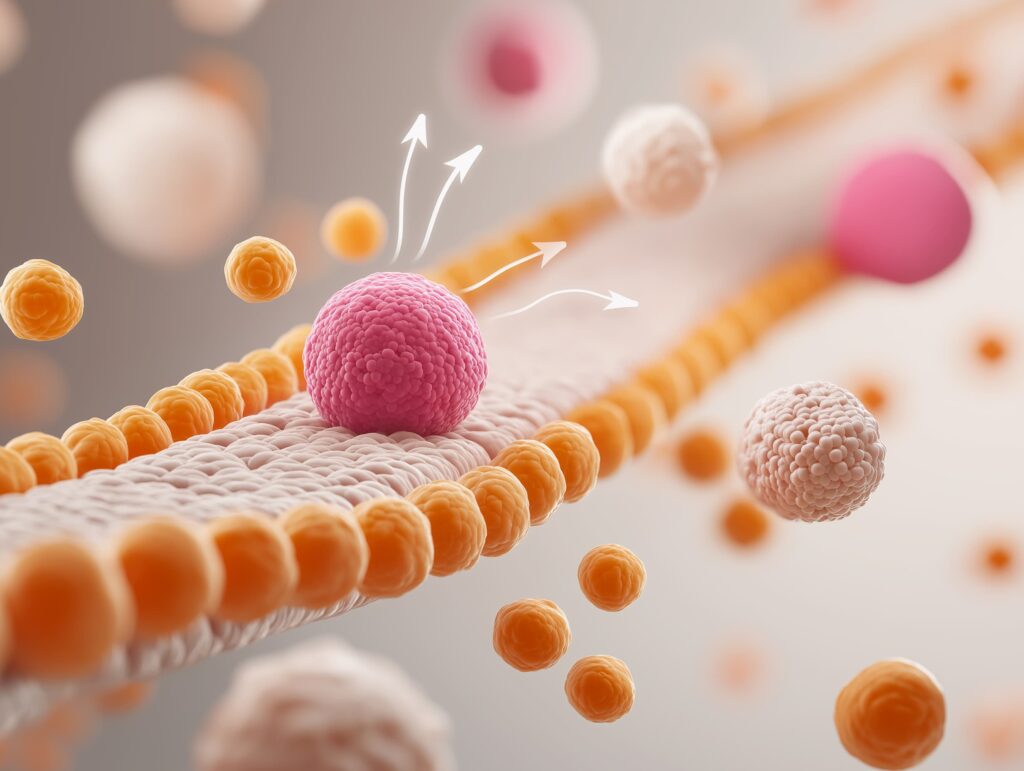
Cancer therapy has undergone significant transformation over the past decades, shifting from broadly cytotoxic treatments toward more targeted and controlled therapeutic strategies. Despite advances in chemotherapy, immunotherapy, and targeted drugs, effective delivery of anticancer agents remains a major challenge. Many potent drugs suffer from poor solubility, low bioavailability, off-target toxicity, and rapid degradation in physiological environments. In this context, enzymatic nanomaterials have emerged as a promising platform for improving the precision, efficacy, and safety of anticancer drug delivery.
Enzymatic nanomaterials combine the structural advantages of nanoscale carriers with the catalytic or responsive properties of enzymes. These hybrid systems can actively participate in drug release, activation, or targeting, rather than serving solely as passive carriers. Their ability to respond to specific biochemical cues in the tumor microenvironment positions them as a key innovation in modern oncology.
Fundamentals of Enzymatic Nanomaterials
Enzymatic nanomaterials refer to nanoscale constructs that either incorporate enzymes or mimic enzymatic activity. They may consist of nanoparticles functionalized with enzymes, enzyme-loaded nanocarriers, or nanomaterials engineered to exhibit enzyme-like catalytic behavior. In drug delivery, enzymes play several critical roles: triggering controlled drug release, activating prodrugs at the tumor site, and modifying the local tumor environment to enhance therapeutic penetration.
The nanoscale dimension of these materials enables enhanced permeability and retention in tumor tissues, a phenomenon driven by leaky tumor vasculature and impaired lymphatic drainage. When combined with enzymatic specificity, this passive targeting can be further refined into a more selective and biologically responsive delivery system.
Enzyme-Triggered Drug Release
One of the most studied applications of enzymatic nanomaterials is enzyme-triggered drug release. Tumor tissues often exhibit abnormal enzyme expression compared to healthy tissues. Proteases, esterases, and glycosidases are frequently upregulated in cancer cells or in the surrounding microenvironment. Nanocarriers designed with enzyme-cleavable linkers can exploit this difference.
In such systems, anticancer drugs are conjugated to nanoparticles via bonds that remain stable in circulation but are cleaved in the presence of specific enzymes. This ensures that drug release occurs predominantly at the tumor site, minimizing systemic toxicity. Compared to conventional nanocarriers that rely on passive diffusion or pH sensitivity alone, enzyme-responsive systems provide a higher level of spatial and biological control.
Enzymatic Activation of Prodrugs
Another important role of enzymatic nanomaterials is the localized activation of prodrugs. Prodrugs are pharmacologically inactive compounds that require enzymatic conversion into active drugs. While prodrugs can reduce toxicity, their systemic activation may still lead to off-target effects.
By embedding or attaching enzymes to nanomaterials, researchers can create platforms where prodrug activation occurs directly at the tumor site. This strategy increases the local concentration of the active drug while keeping systemic exposure low. Enzyme-mediated activation also allows the use of highly potent cytotoxic agents that would otherwise be too dangerous for systemic administration.
Modulating the Tumor Microenvironment
The tumor microenvironment presents multiple barriers to effective drug delivery, including dense extracellular matrices, abnormal vasculature, and hypoxic conditions. Enzymatic nanomaterials can be engineered to actively modify these barriers.
For example, enzymes that degrade components of the extracellular matrix can be incorporated into nanoparticles to enhance tissue penetration. Other enzymatic systems generate reactive species or alter metabolic conditions locally, sensitizing tumor cells to chemotherapy. By reshaping the tumor microenvironment, enzymatic nanomaterials improve not only drug delivery but also therapeutic responsiveness.
Enzyme-Mimicking Nanomaterials
In addition to using natural enzymes, some nanomaterials are designed to mimic enzymatic activity. These so-called nanozymes exhibit catalytic functions similar to oxidases, peroxidases, or catalases. Nanozymes offer several advantages over natural enzymes, including greater stability, lower cost, and resistance to harsh physiological conditions.
In anticancer drug delivery, enzyme-mimicking nanomaterials can generate reactive oxygen species within tumor tissues, inducing oxidative stress and enhancing the cytotoxic effects of chemotherapeutic agents. When combined with drug delivery functions, nanozymes act as multifunctional therapeutic platforms rather than simple carriers.
Advantages Over Conventional Nanocarriers
Compared to traditional nanoparticle drug delivery systems, enzymatic nanomaterials provide several distinct advantages. First, they introduce an active biological component that allows dynamic interaction with the tumor environment. Second, their responsiveness to specific enzymatic signals enhances targeting precision. Third, they enable combination strategies, integrating drug delivery with catalytic therapy or microenvironment modulation.
These properties align well with the principles of precision medicine, where treatment is adapted to the biological characteristics of both the tumor and the patient. Enzymatic nanomaterials can be tailored to exploit specific enzymatic profiles associated with different cancer types.
Challenges and Limitations
Despite their promise, enzymatic nanomaterials face several challenges before widespread clinical adoption. Enzyme stability remains a major concern, as enzymes can lose activity during storage or circulation. Immune recognition and potential immunogenicity of enzyme-containing systems must also be carefully addressed.
Manufacturing complexity is another limitation. Producing reproducible, scalable enzymatic nanomaterials that meet regulatory standards is significantly more demanding than synthesizing conventional nanoparticles. Additionally, the heterogeneity of tumor enzyme expression may limit the universality of enzyme-responsive strategies.
Comprehensive in vivo studies and long-term safety evaluations are essential to fully understand the pharmacokinetics, biodistribution, and potential side effects of these systems.
Future Perspectives
The future of enzymatic nanomaterials in anticancer drug delivery lies in their integration with other advanced therapeutic approaches. Combining enzymatic nanocarriers with immunotherapy, gene therapy, or personalized diagnostics could lead to highly adaptive treatment platforms. Advances in nanofabrication and protein engineering are expected to improve enzyme stability and specificity, addressing current limitations.
Moreover, better characterization of tumor enzymatic landscapes will enable more rational design of enzyme-responsive systems. As our understanding of cancer biology deepens, enzymatic nanomaterials are likely to play an increasingly central role in the development of safer and more effective anticancer therapies.
Conclusion
Enzymatic nanomaterials represent a powerful evolution in the field of anticancer drug delivery. By combining nanoscale transport with enzymatic specificity and catalytic function, these systems overcome many limitations of conventional therapies. Although significant challenges remain, ongoing research continues to refine their design and expand their clinical potential. As part of a broader shift toward precision oncology, enzymatic nanomaterials offer a compelling pathway toward more targeted, efficient, and patient-friendly cancer treatments.
Last modified: March 31, 2026